
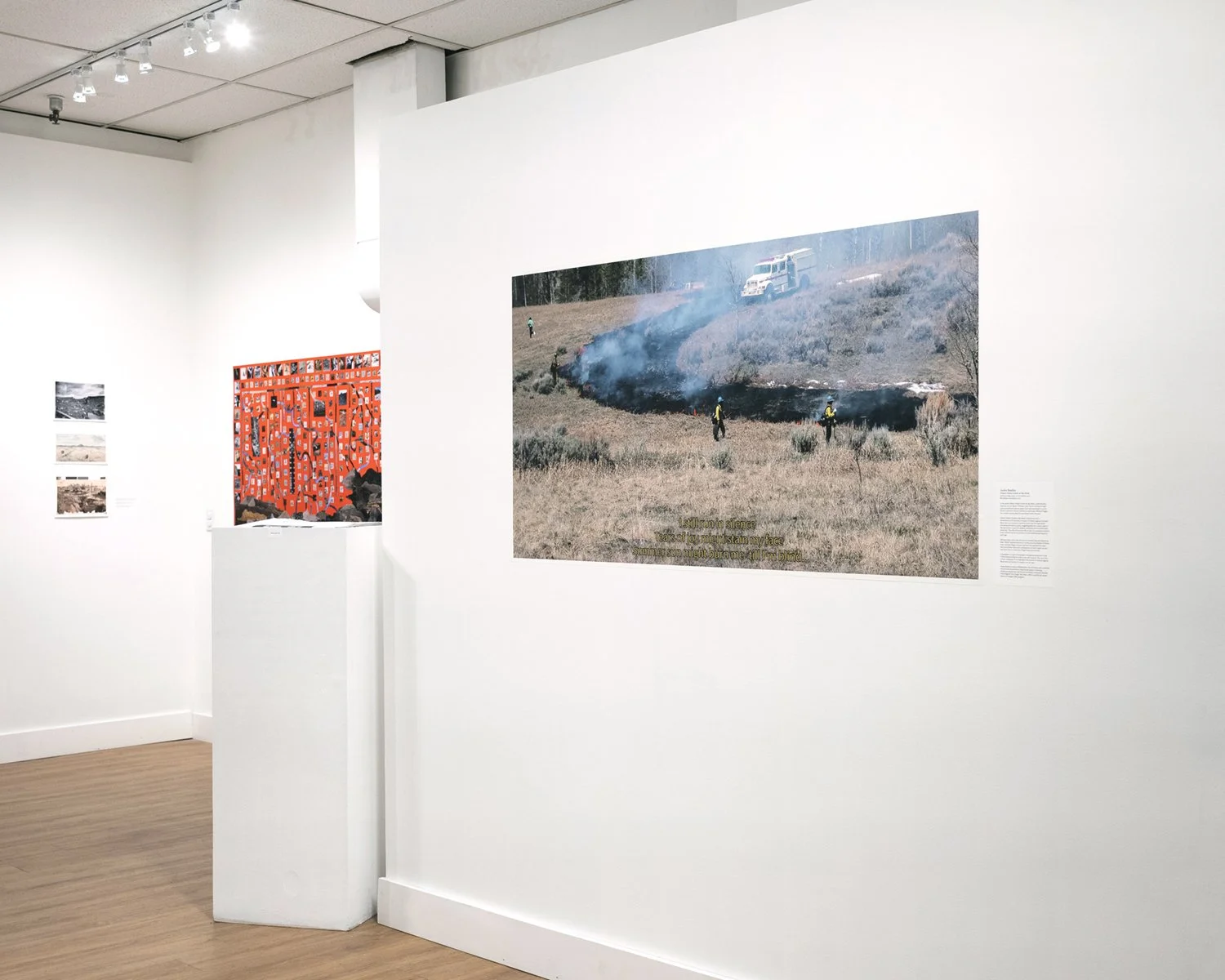
Savannah Wood, Hard to Get and Dear Paid For, digital video, runtime: 4:14, 2020
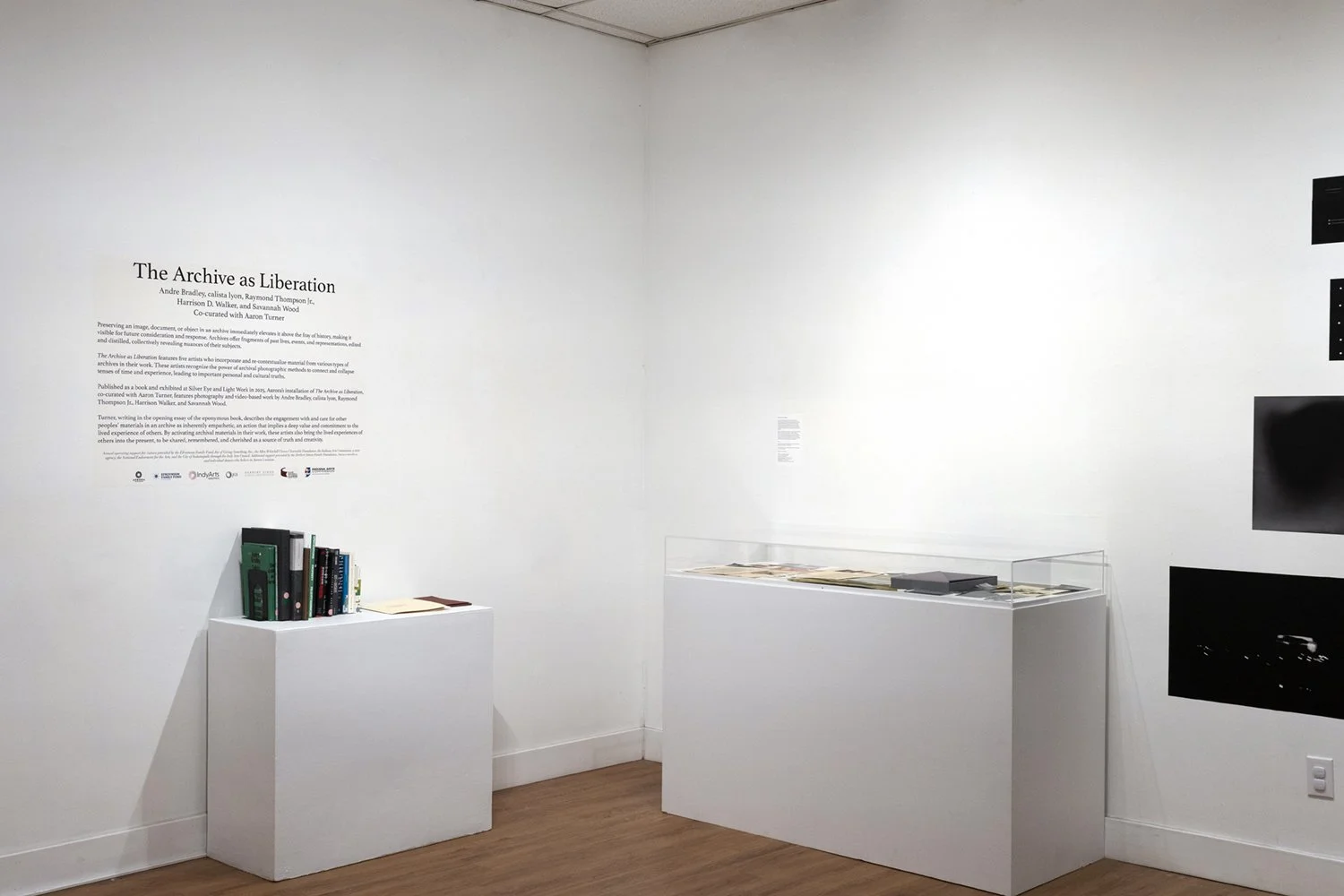
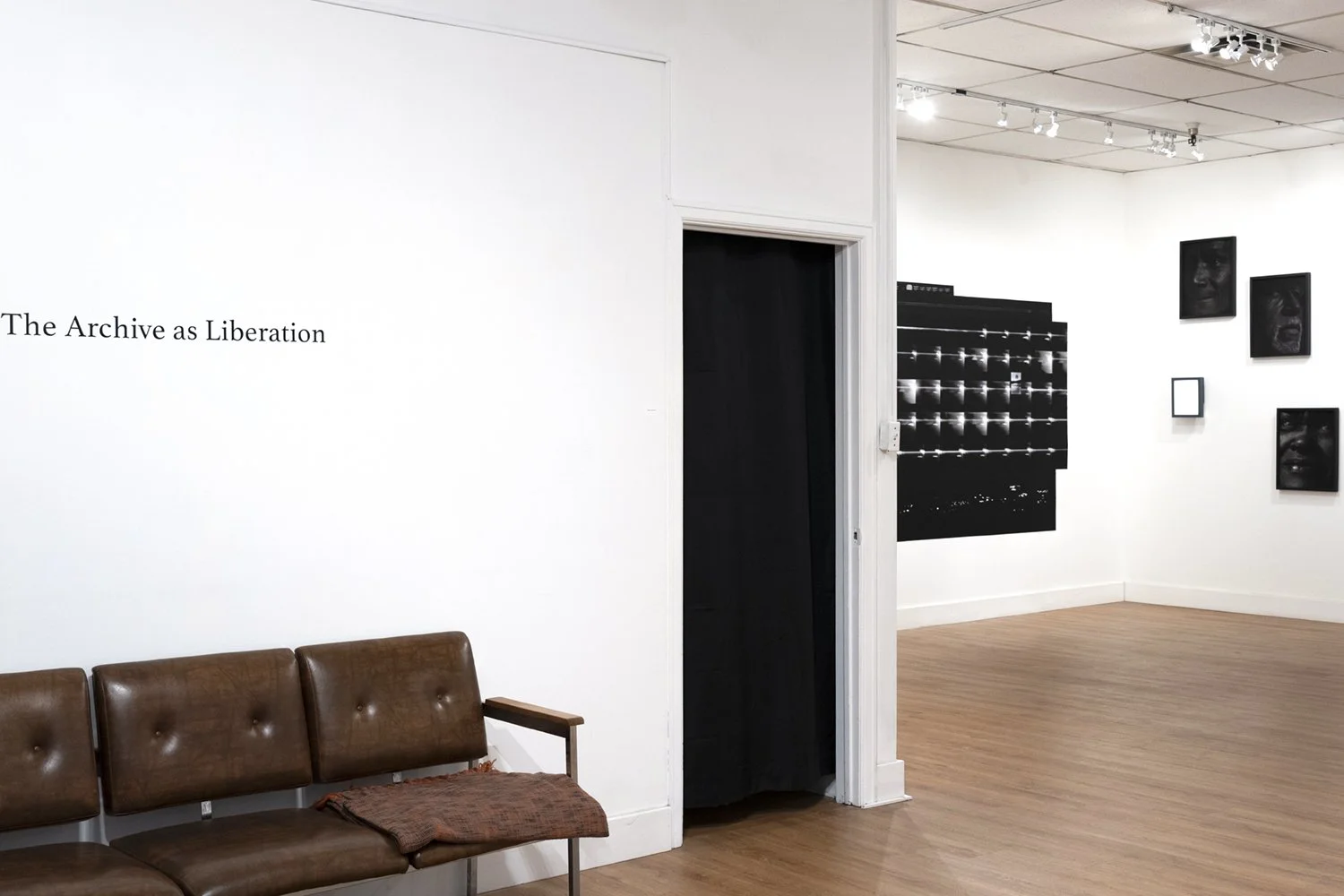
The Archive as Liberation
Andre Bradley, calista lyon, Raymond Thompson Jr., Harrison D. Walker, and Savannah Wood
Co-curated with Aaron Turner
February 6-April 17, 2026
Opening reception: February 6, 6-9pm
Talk with Aaron Turner, February 6, 6pm
Free and open to the public
Aurora PhotoCenter, Main Gallery
1125 Brookside Avenue, Suite C9, Indianapolis
Preserving an image or document in an archive immediately elevates it above the fray of history, making it visible for future consideration and response. Archives offer fragments of past lives, events, and representations, edited and distilled, collectively revealing nuances of their subjects and even more about their makers.
The Archive as Liberation features five artists who incorporate and re-contextualize material from various types of archives in their work. These artists recognize the power of archival photographic methods to connect and collapse tenses of time and experience, leading to important personal and cultural truths. Published as a book and exhibited at Silver Eye and Light Work in 2025, the 2026 Aurora installation of The Archive as Liberation, co-curated with Aaron Turner, features photography and video-based work by Andre Bradley, calista lyon, Raymond Thompson Jr., Harrison Walker, and Savannah Wood. Turner, writing in the opening essay of the eponymous book, describes the engagement with and care for other peoples’ materials in an archive as inherently empathetic, an action that implies a deep value and commitment to the lived experience of others. The five artists in The Archive as Liberation lay bare that beautiful empathy through their work.
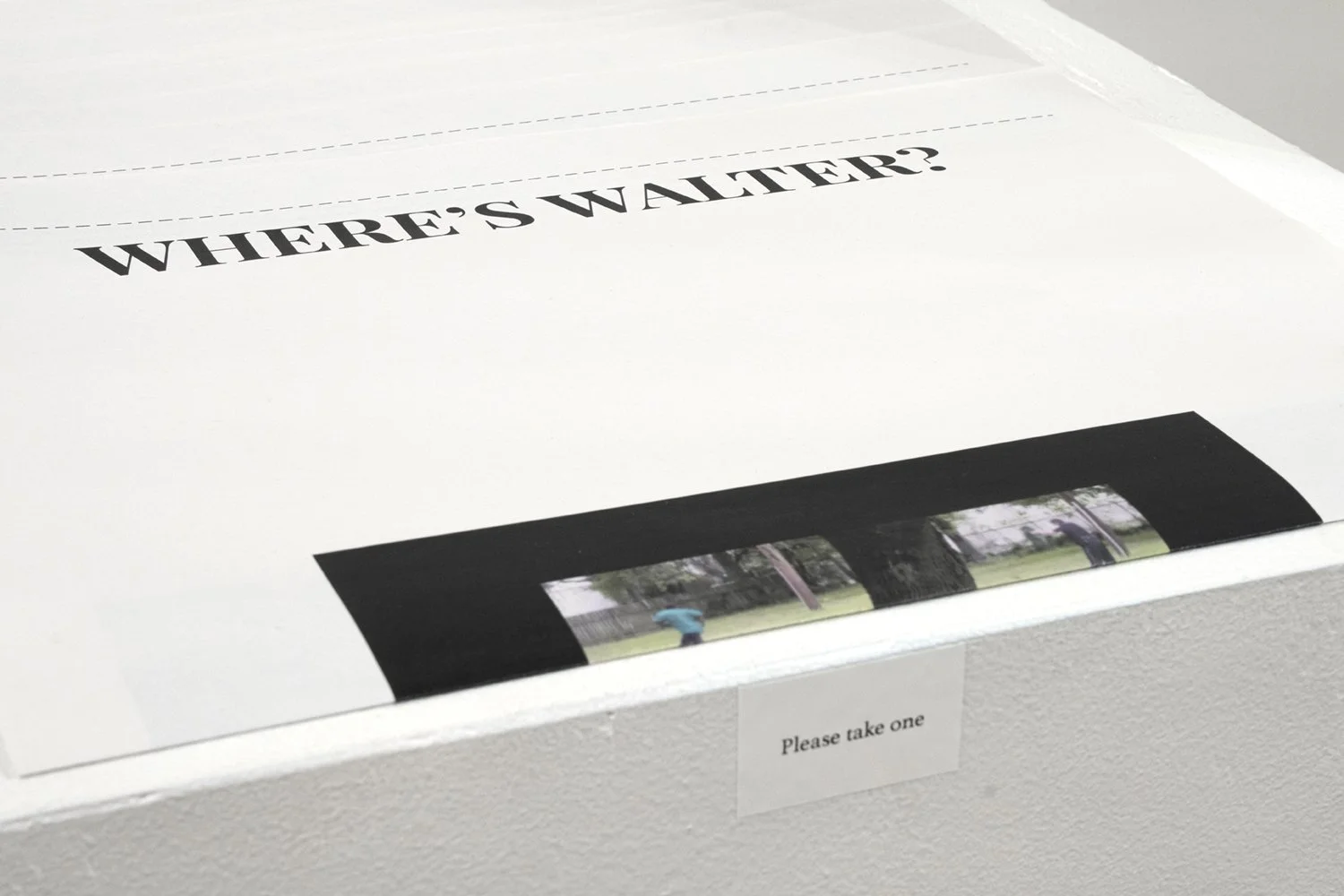
Andre Bradley, based in Philadelphia, PA, uses curatorial and photobook practices to explore the subject of adverse childhood experiences (ACEs) and the Black community. Bradley holds degrees from Image Text Ithaca, MICA, and Rhode Island School of Design’s MFA program. In the series Where’s Walter, Bradley depicts a cut-out figure of Walter Lamar Scott, whose murder by policeman Michael Slager in 2015 was recorded by eyewitness Feidin Santana, running through various American National Parks. The work is simultaneously a remembrance of Scott and a critique of violence against unarmed Black men and women in America.

Andre Bradley, Where’s Walter, 2020
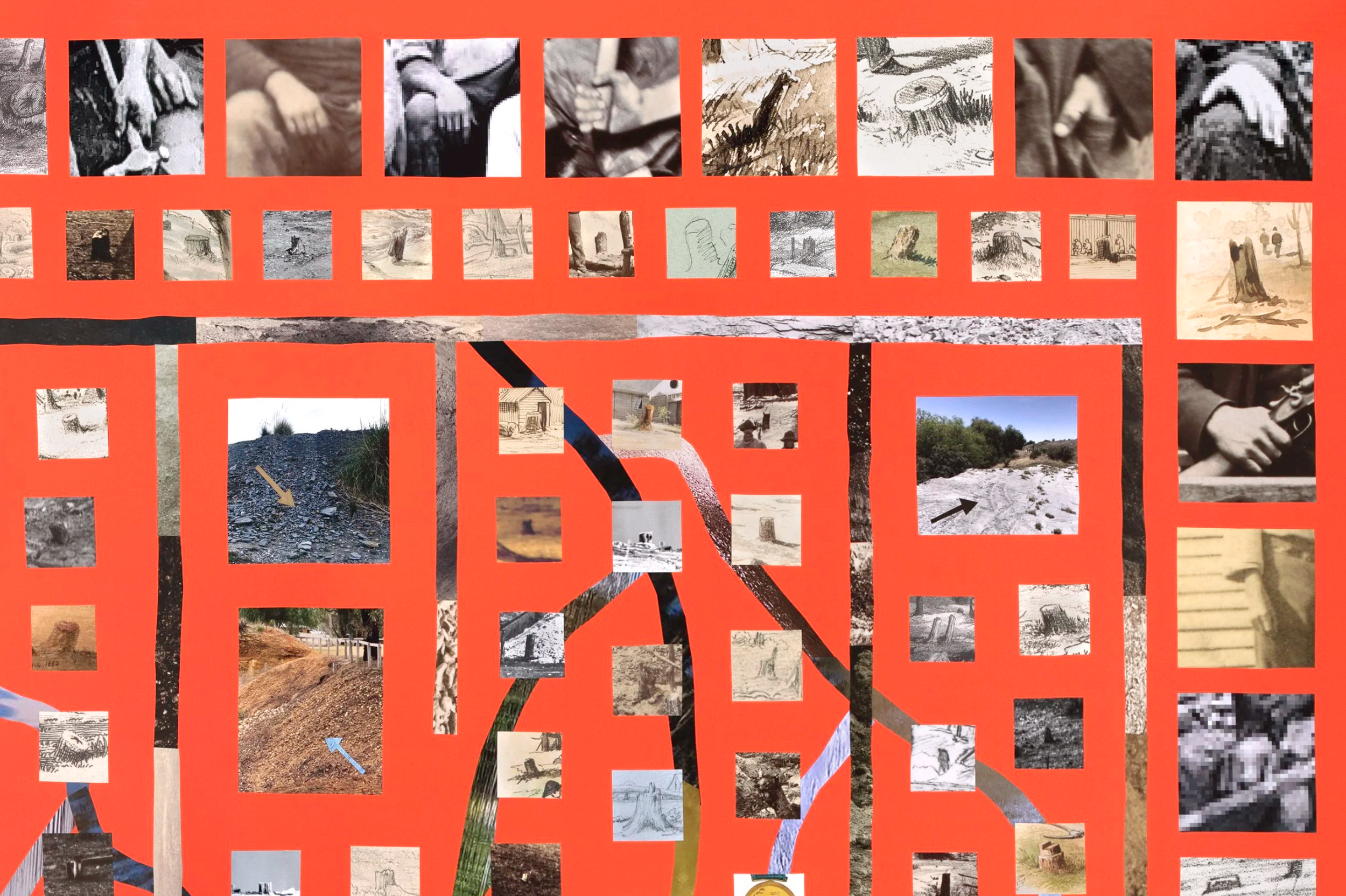
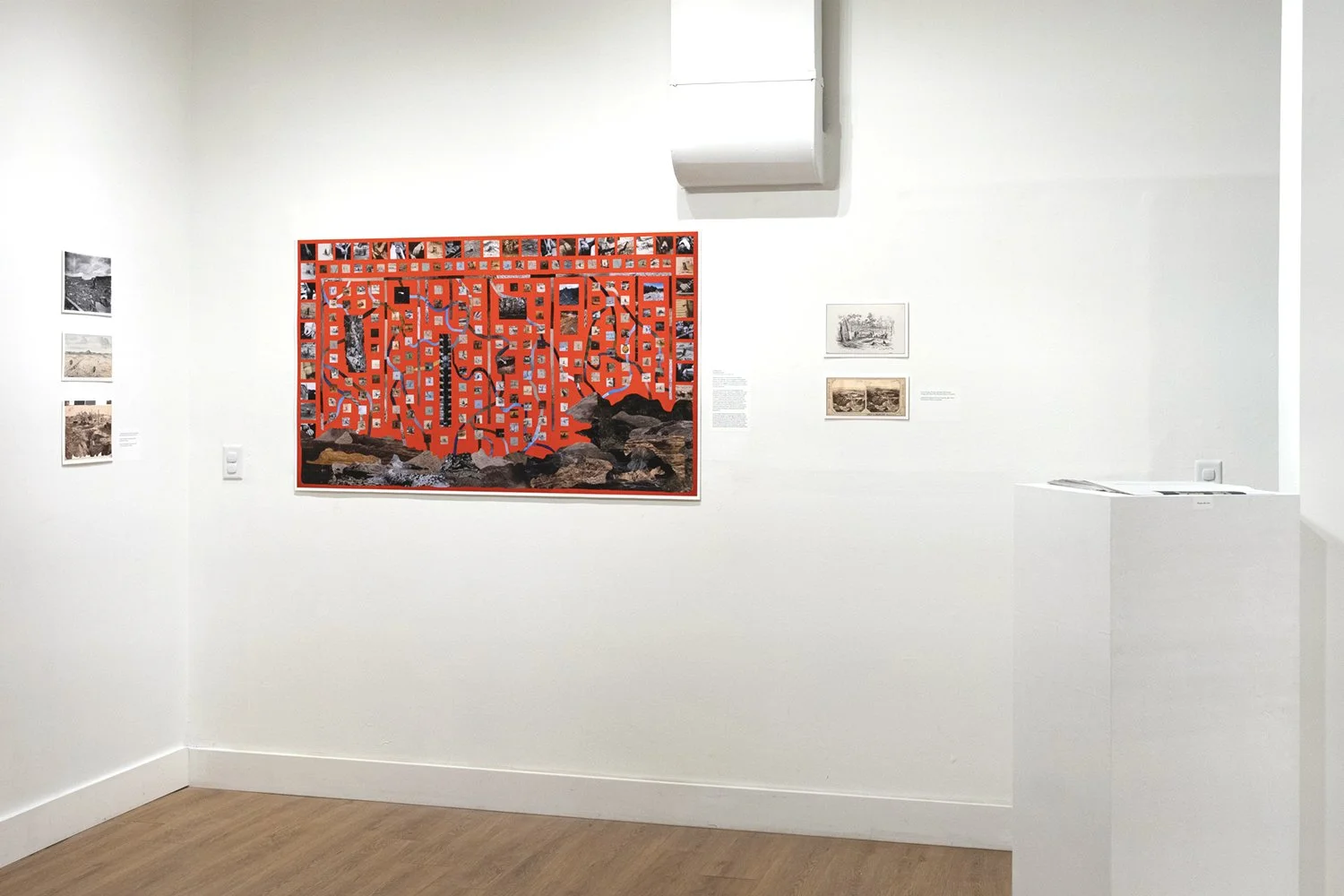
calista lyon, Remembering Future (detail), 2023
calista lyon, born in Australia and now based in Fayetteville, AR, uses an expanded photographic practice in which she creates installations, performances, and community-engaged works that explore knowledge and memory as a form of critical resistance in our time of colonial capitalism. Lyon is an assistant professor of photography and expanded media at the University of Arkansas. Her work, Remembering Future, features archival images that document destructive gold extraction in the Indigenous Box-Ironbark forest and woodland of Victoria, Australia, in the 19th Century. Collaged over an alarming field of hunter orange-red, these images ask the viewer to consider the ecological price paid when immediate capital gain supersedes stewardship of the land for future generations.

Raymond Thompson Jr., Portal #110.958, Railroad Junction, New Bern, NC, archival inkjet print, 20 x 16 inches, 2023
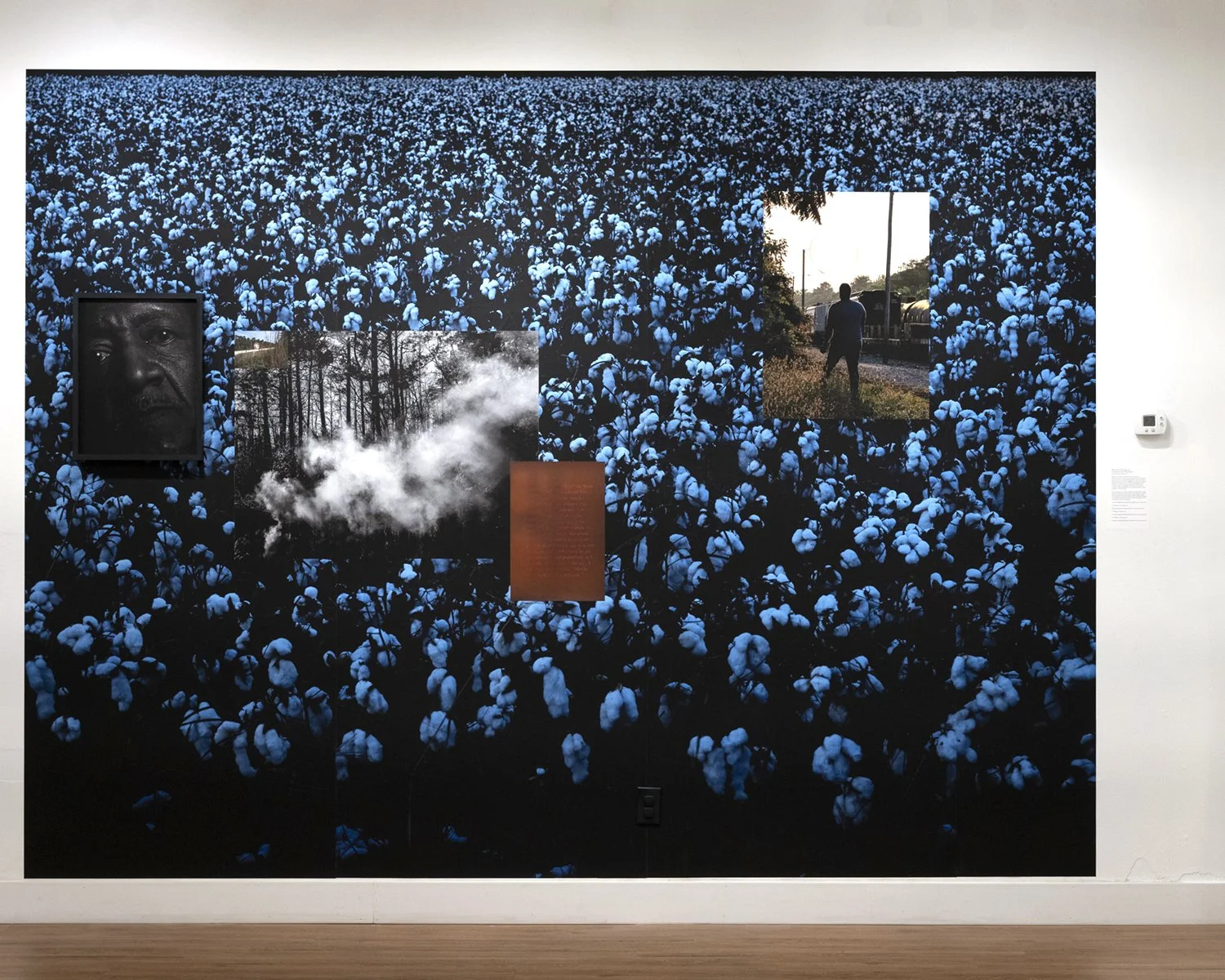
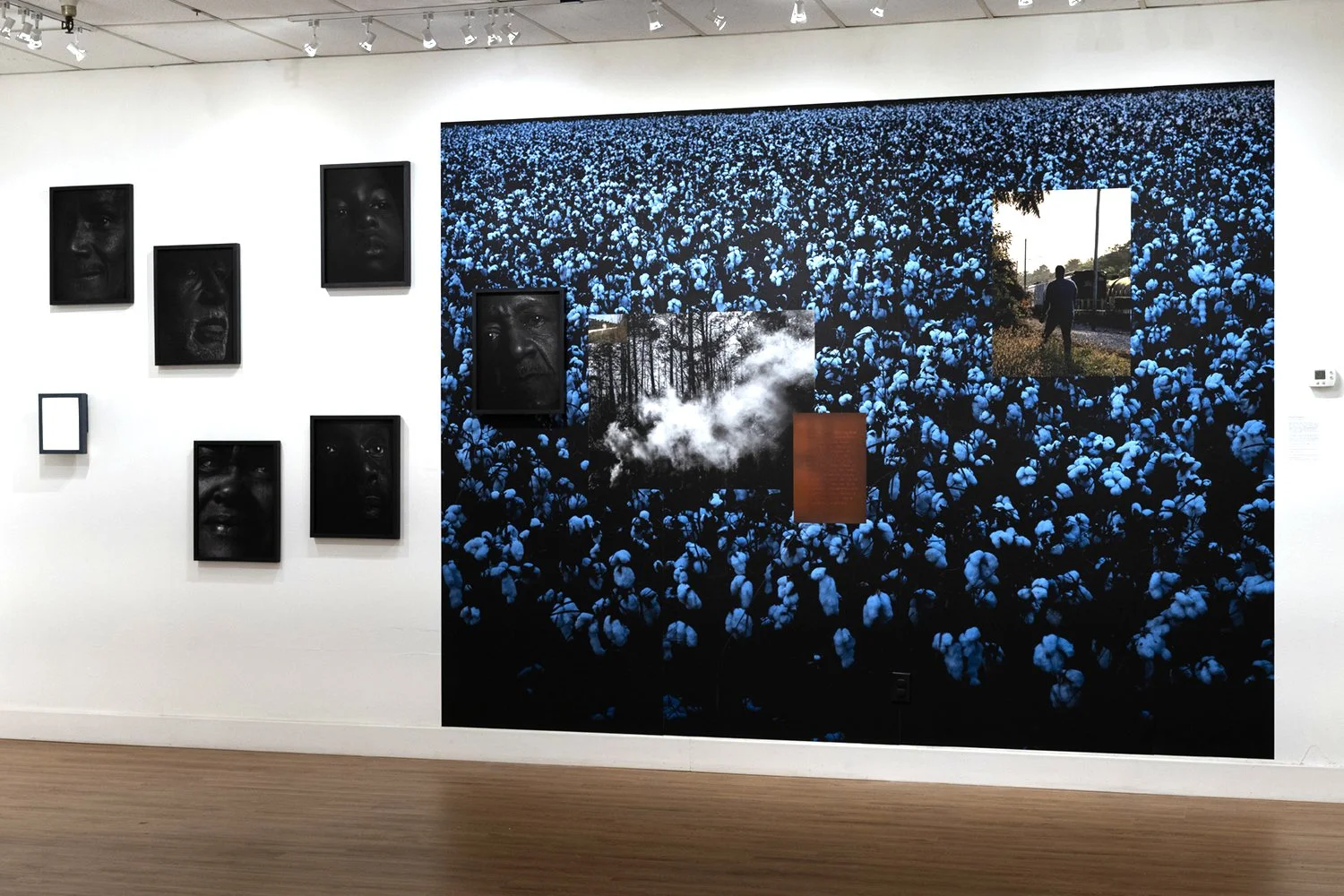
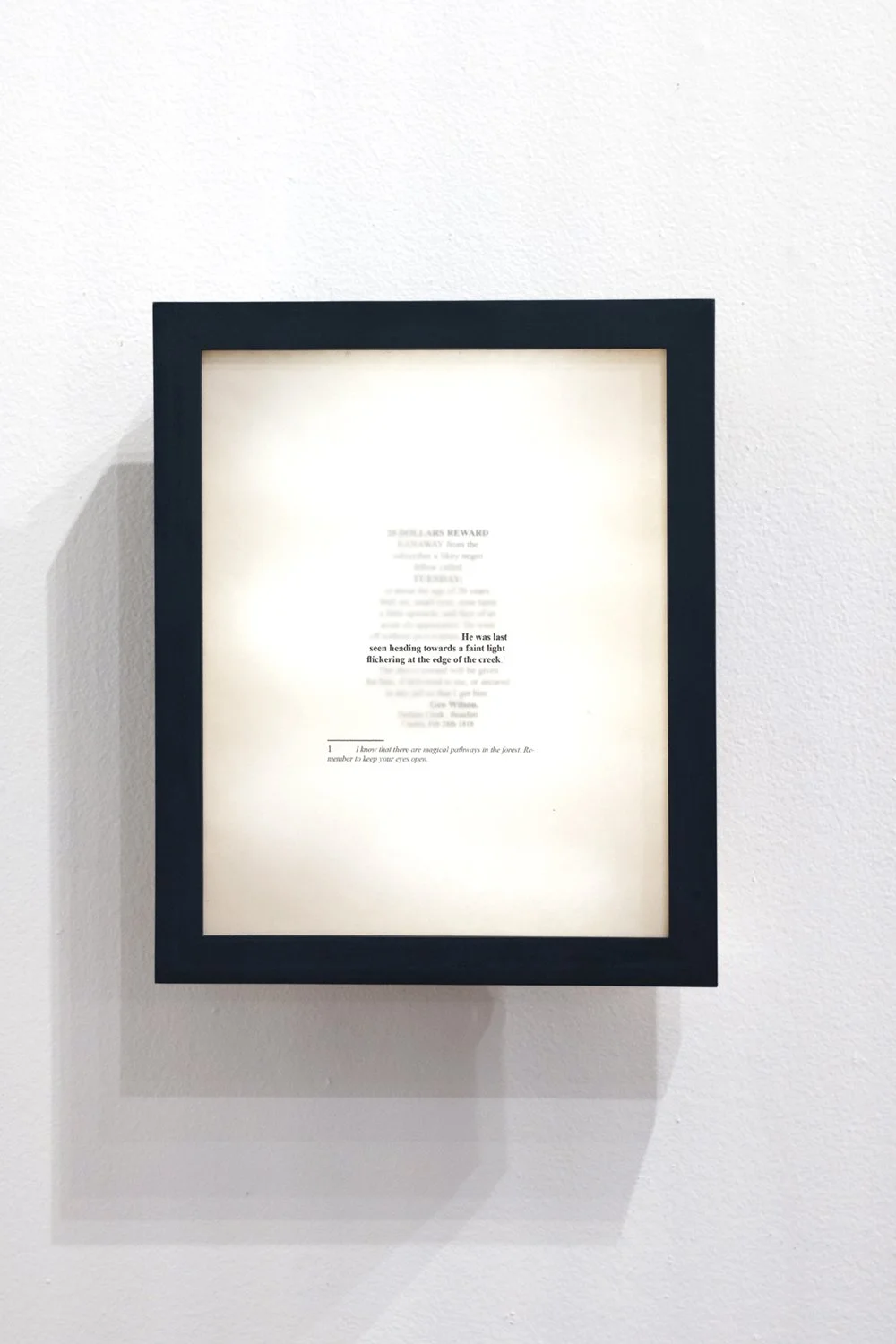
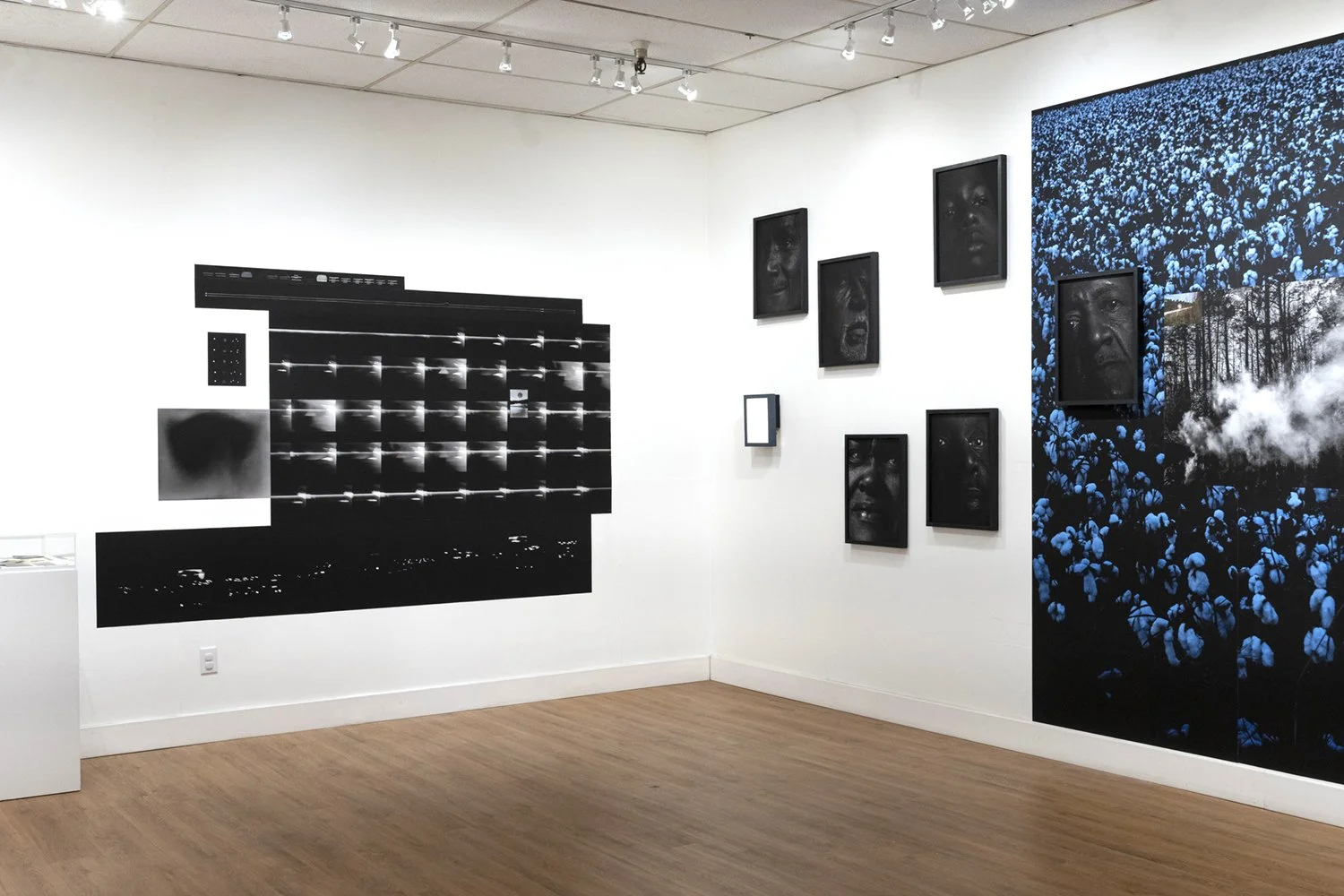
Raymond Thompson Jr., based in Austin, TX, is an interdisciplinary artist, educator, and visual journalist whose work explores how race, memory, representation, and place combine to shape the Black environmental imagination of the North American landscape. Thompson holds an MFA in photography from West Virginia University, an MA in journalism from the University of Texas at Austin, and a degree in American Studies from the University of Mary Washington. He is an assistant professor at the University of Texas at Austin. In this installation of his series it’s hard to stop rebels who time travel, the artist combines an archival 19th Century notice advertising the reward for capturing an escaped slave, his images made in cotton fields, train yards, and roadsides, and close, detailed portraits to evoke hidden histories and connect the Black experience to the American landscape.
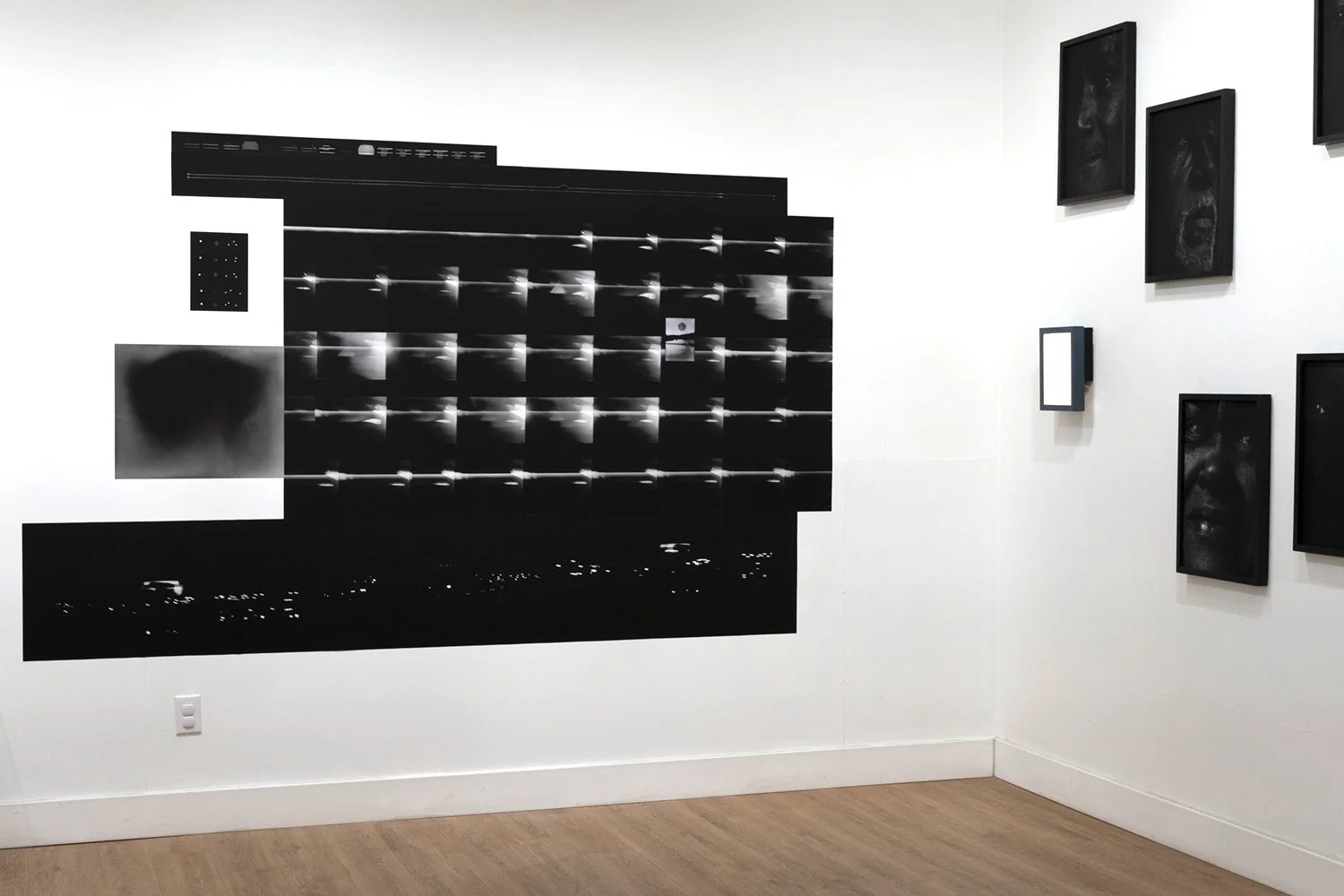
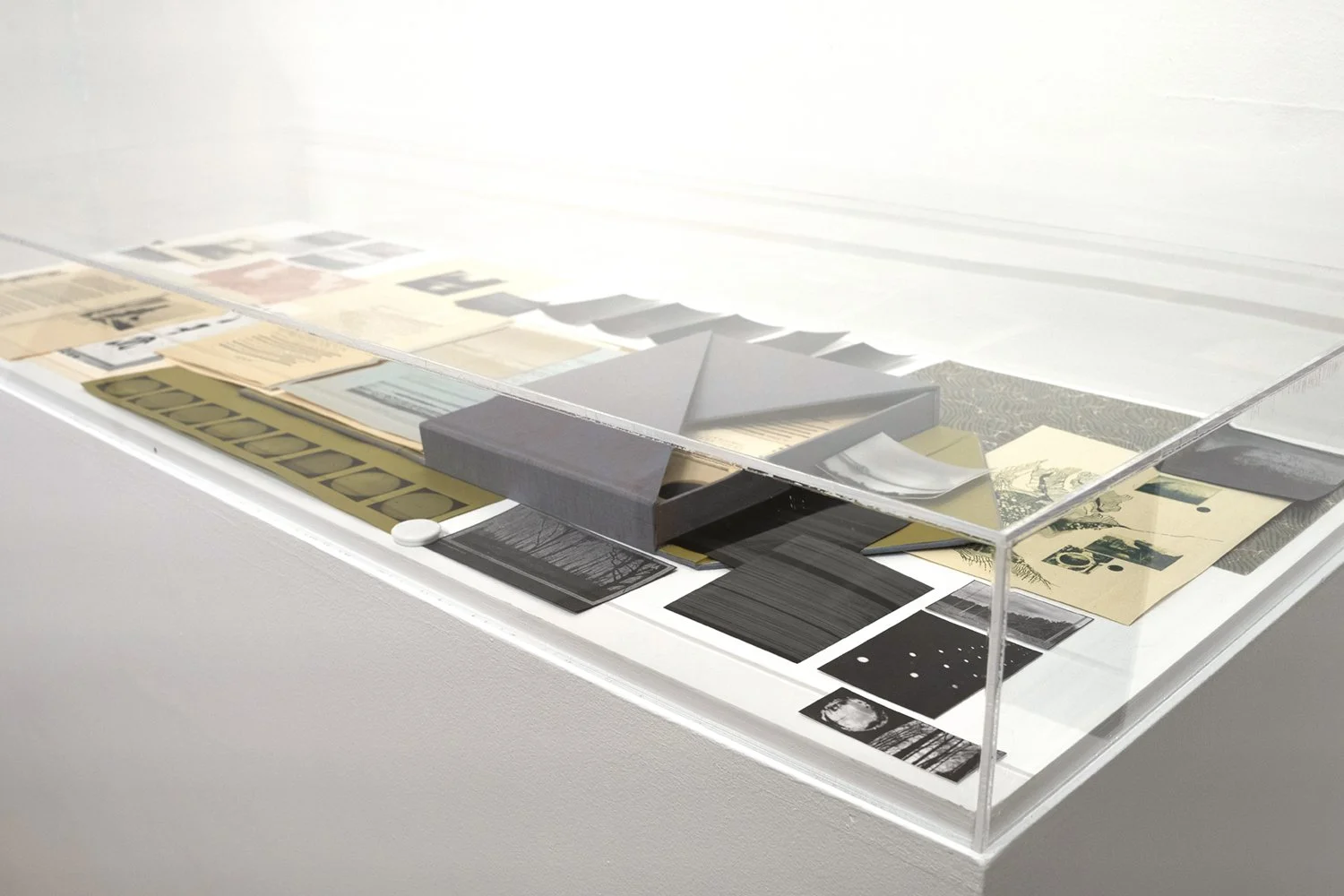
Harrison D. Walker, based in Westford, MA, is an artist who uses techniques from printmaking, drawing, and photography to create forms that reference celestial phenomena and the otherworldly. Walker holds an MFA in photography from Temple University. He served as visiting faculty at such institutions as Maine Media Workshops, Wesleyan College, and the University of Alabama, and currently is the Manager of Studio Operations for the Harvard Art Museums. Walker’s experience growing up in Huntsville, Alabama, nicknamed “Rocket City” for its history with NASA, installed a lifelong fascination with space exploration and a quest for the unknown. In this installation, Harrison combines images and materials from several bodies of work, including Footnotes, which combines speculative archival materials with the artist’s own images, existing in between the two worlds of discovery and imagination.

Harrison D. Walker, Transit, 36 x 66.5 inches, 2022
Savannah Wood, with roots in Baltimore and Los Angeles, primarily works within photography, text, and installation to explore how spirituality, domesticity, and our relationships to place shape our identities. Wood holds a degree from the University of Southern California and currently serves as the executive director of Afro Charities. In the digital video Hard to Get and Dear Paid For, Wood presents archival family photographs, video, and poetry to tell the story of Enoch George Howard, an enslaved man born in 1814 near Unity, Maryland, who came to own the land here he and his family were enslaved, including a piece of land called Hard to Get and Dear Paid For. Howard’s daughter Martha used proceeds from his estate to invest in the influential Afro-American Newspaper. As the Executive Director of Afro Charities, Wood leads the charge to increase access to the 130+-year-old AFRO American Newspapers’ extensive archives.
Aaron Turner is a photographer, educator, and independent curator, born and raised in the Arkansas Delta. Turner holds an MA from Ohio University and an MFA from Mason Gross School of the Arts. In his studio practice, he uses the 4×5 view camera to create still-life studies on identity, history, abstraction, and archives. He most recently joined the University of Michigan’s Penny W. Stamps School of Art & Design as an assistant professor.
Turner will give a presentation about the exhibition on February 6, at 6pm, in the Main Gallery, followed by a question-and-answer period. The book, published by Light Work, will also be available for purchase for the duration of the exhibition.
Annual operating support for Aurora PhotoCenter provided by the City of Indianapolis through the Indy Arts Council. Additional annual support provided by the Efroymson Family Fund, Joy of Giving Something Foundation, Inc., Allen Whitehill Clowes Charitable Foundation, Indiana Arts Commission, Aurora Members, and donors who believe in Aurora’s mission.